Chapter 6Filtration and waterComparison
Aquarium Filters: Sponge vs Hang-on-Back vs Canister vs Internal
Sponge, hang-on-back, canister and internal aquarium filters compared: how each works, maker tank ratings, upkeep and which suits bettas, goldfish or big tanks.
We earn from qualifying purchases through links on this page. How we make money.
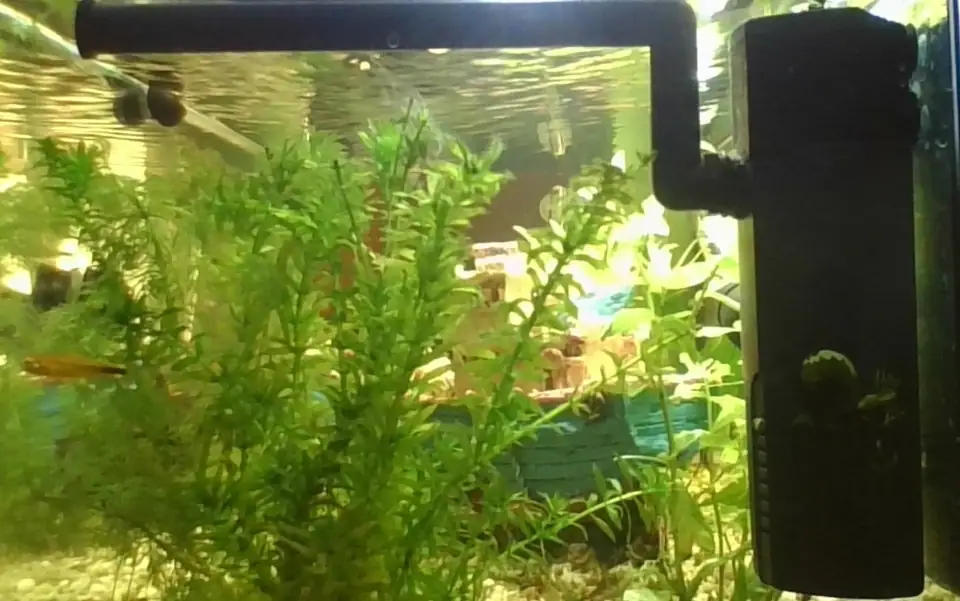
The four filter types do the same job in different ways. Hang-on-back filters suit most tanks from 10 to 75 gallons, canisters suit big or goldfish tanks, sponge filters give bettas and fry gentle flow, and internal filters fit nano tanks. The RSPCA says no fish should be kept without a working filter.
What a filter actually does
Most aquarium filters combine three kinds of filtration, and Aqueon’s canister lists all three:
- Mechanical: foam or floss that traps particles.
- Chemical: activated carbon that removes odors and discoloration.
- Biological: porous media where helpful bacteria turn fish waste into less harmful compounds.
RSPCA Australia calls biological filtration the most important of the three. That is why filter care is about protecting the bacteria as much as cleaning. The cycling chapter explains how the bacteria colony forms.
The four types compared
| Type | How it works | Maker example and rating | Best for |
|---|---|---|---|
| Hang-on-back | A pump hangs on the rim and pulls water through a media box | Aqueon PRO QuietFlow: 5 stages, sizes 10 to 75 | Most tanks from 10 to 75 gallons |
| Canister | A sealed canister under the tank, with hoses in and out | Aqueon QuietFlow 200: 200 GPH, tanks up to 55 gallons | Big tanks, goldfish, planted tanks |
| Internal | A small pump and cartridge inside the tank, on suction cups | Aqueon SmartClean extra small: 0 to 35 GPH, 0 to 5 gallons | Nano and betta tanks |
| Sponge | An air pump bubbles water up through a sponge | Air driven; flow set by the air pump | Bettas, shrimp and fry needing gentle flow |
GPH is gallons per hour of flow. The maker’s tank rating is the number to match; a rating a little above your tank’s volume leaves some margin.
Canister, hang-on-back, sponge and internal filters
Live listings, shown by eBay
Opens eBay in a new tab. Check condition, seller feedback and returns.
Hang-on-back filters
These hang on the back rim, and kits often use them: the Marina kits ship with a clip-on Slim filter matched to 5, 10 or 20 gallons. Media sit in an easy-to-reach box, so maintenance is quick. They need a gap at the back of the lid.
Canister filters
A canister sits in the stand and holds far more media than a hang-on-back. Aqueon’s QuietFlow canisters come pre-loaded with foam pads, carbon, bio-balls and ceramic rings, and are rated at 200, 300 and 400 gallons per hour, the smallest for tanks up to 55 gallons. They suit goldfish, which RSPCA Australia calls heavy feeders and high waste producers. They take longer to open and clean.
Internal and sponge filters for small tanks
Internal filters mount inside the tank. Aqueon’s SmartClean extra small model has an adjustable flow of 0 to 35 gallons per hour for tanks up to 5 gallons, with a cartridge change every 4 weeks.
Sponge filters are the simplest of all: an air pump pushes bubbles up a tube, drawing water through a sponge where bacteria grow. The flow is soft, which suits bettas: University of Illinois vets call for a low-flow filter so a betta’s fins are not hurt by suction, and RSPCA Australia asks for adjustable flow. See the betta setup chapter.
Installing a new filter
Filter manuals share a few setup rules, and most come down to water and electricity:
- Unplugged while you fit it. The Marina kit manual says the aquarium should be unplugged before the filter is installed.
- Tank full first. Aqueon’s setup guide says to plug the filter in after the tank is filled to about an inch below the rim.
- A drip loop in the cord. The Marina manual asks for a loop in each cord below the socket, so water runs off the loop instead of into the outlet.
- The right mount. Aqueon’s small internal filters come with suction cups for frameless tanks and hanging clips for framed ones.
Canisters add a step: Aqueon’s QuietFlow canisters come with quick-disconnect valves on the hoses and several return options, such as a spray bar or a water director, so you can aim the outflow away from delicate fish. Several of Aqueon’s filters are self-priming and restart on their own after a power cut, a useful feature if the power goes out while you are away.
Once it runs, leave it running. The bacteria colony lives on the media, and the Marina manual asks you to check each day that the filter is working smoothly.
Cleaning a filter without losing the bacteria
The sources agree on the principle and differ on the method:
- Marina kit manual: replace cartridges every 2 to 4 weeks, but never all at the same time, to keep the biological filtration.
- Aqueon canister: change carbon every 30 days and rinse or replace foam pads as needed.
- RSPCA Australia: rinse media in tank water, never tap water, monthly or when clogged.
Tap water is treated with chlorine or chloramine to kill bacteria, which is why the rinse happens in a bucket of old tank water. Always unplug the filter first; the Marina manual says to disconnect every appliance before putting your hands in the water. The cleaning chapter has the full routine.
Siphons and buckets for filter days
Live listings, shown by eBay
Opens eBay in a new tab. Check condition, seller feedback and returns.
Which filter should you buy?
Match the filter to the tank and the fish. For a betta, a sponge or small adjustable filter; for a 20 to 29 gallon community or goldfish tank, a hang-on-back or small canister rated above the volume; for 55 gallons and up, a canister. Our tank sizes chapter and the goldfish setup give the volumes, and the setup checklist lists everything else.
Frequently asked questions
What is the best type of filter for an aquarium?
It depends on the tank. Hang-on-back filters suit most tanks from 10 to 75 gallons, canisters suit big or heavily stocked tanks, sponge filters suit bettas and fry that need gentle flow, and small internal filters suit nano tanks. Size it to the maker's tank rating.
How long should a filter be on in an aquarium?
All the time. The helpful bacteria live on the filter media and need water flowing over them, and the Marina kit manual asks you to check every day that the filter is running smoothly.
How often should I change the filter cartridge?
Makers give 2 to 4 weeks (Marina) or every 4 weeks (Aqueon internal filters), but the Marina manual warns never to change all cartridges at once, so the biological filtration survives. RSPCA Australia suggests rinsing media in tank water monthly instead of replacing it.
How do I keep my fish tank crystal clear?
A filter sized for the tank, regular partial water changes, not overfeeding and keeping the tank out of direct sunlight. Mechanical media catch particles; chemical media such as activated carbon, which Aqueon says to change every 30 days, help with odors and tint.
Sources
- Choosing an Aquarium: Keeping Pet FishRSPCA
- Why is water quality important when setting up a fish aquarium?RSPCA Australia
- How should I care for my goldfish?RSPCA Australia
- Bettas Need More Than BowlsUniversity of Illinois College of Veterinary Medicine
- QuietFlow Canister FiltersAqueon
- QuietFlow Internal Power Filters with SmartClean TechnologyAqueon
- Aqueon PRO QuietFlow Aquarium Power FilterAqueon
- Setting Up a Freshwater AquariumAqueon
- Marina LED Aquarium Kit instructions (5, 10 and 20 gallon)Rolf C. Hagen, hosted by Chewy
Part of Filtration and waterStart here: Fish Tank Supplies Checklist: Everything a New Aquarium Needs
Read next
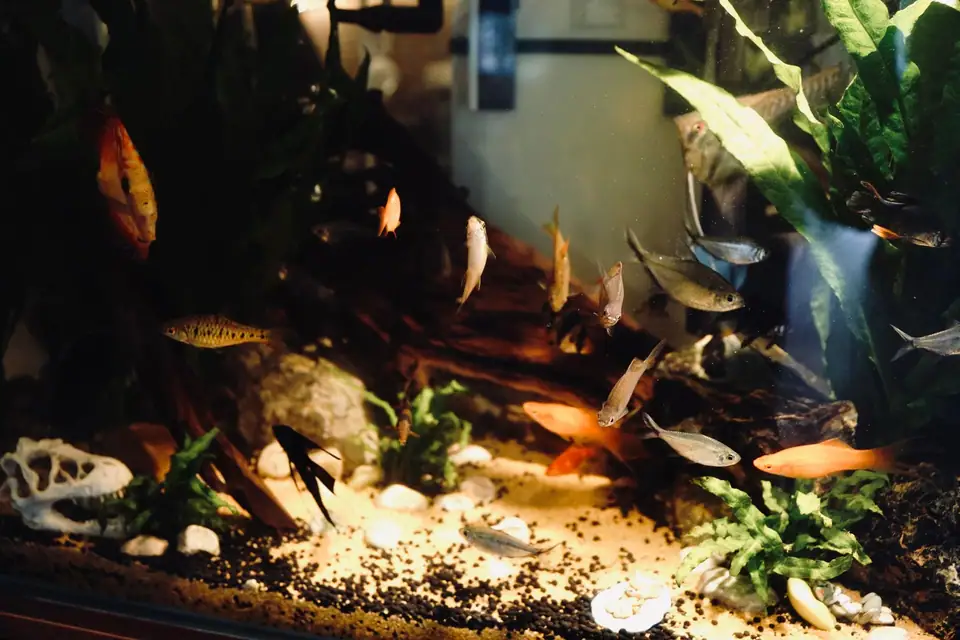
Fish Tank Supplies Checklist: Everything a New Aquarium Needs
What a new freshwater aquarium needs before fish: tank, lid, filter, heater, light, conditioner, test kit, substrate and food, with sizes from vets and makers.
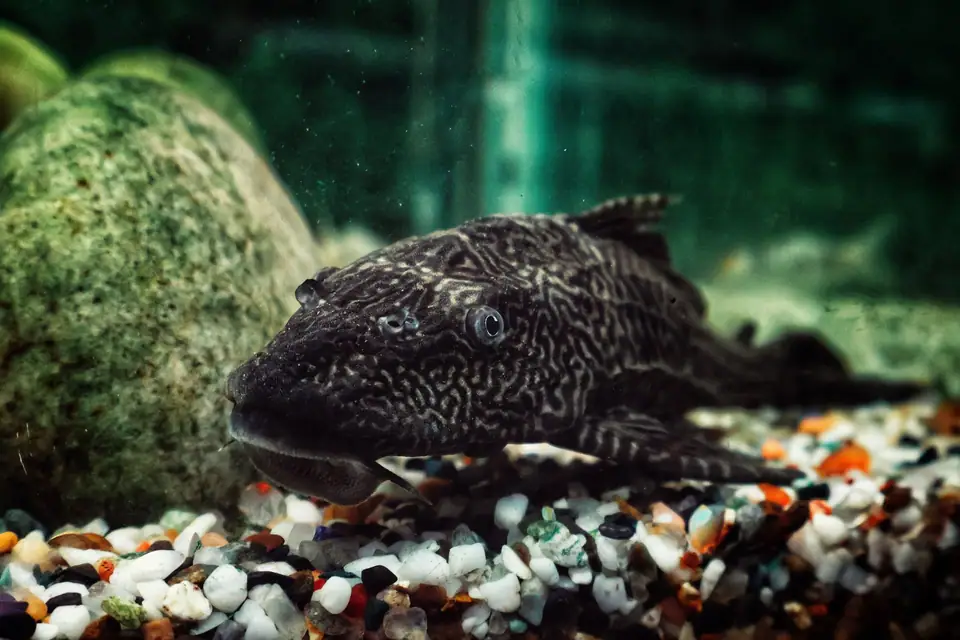
How to Clean a Fish Tank: Water Changes, Gravel Vacuums and Algae
How to clean a fish tank: how much water to change and how often per the RSPCA, VCA and makers, gravel vacuuming, algae, and filter care that keeps the cycle.
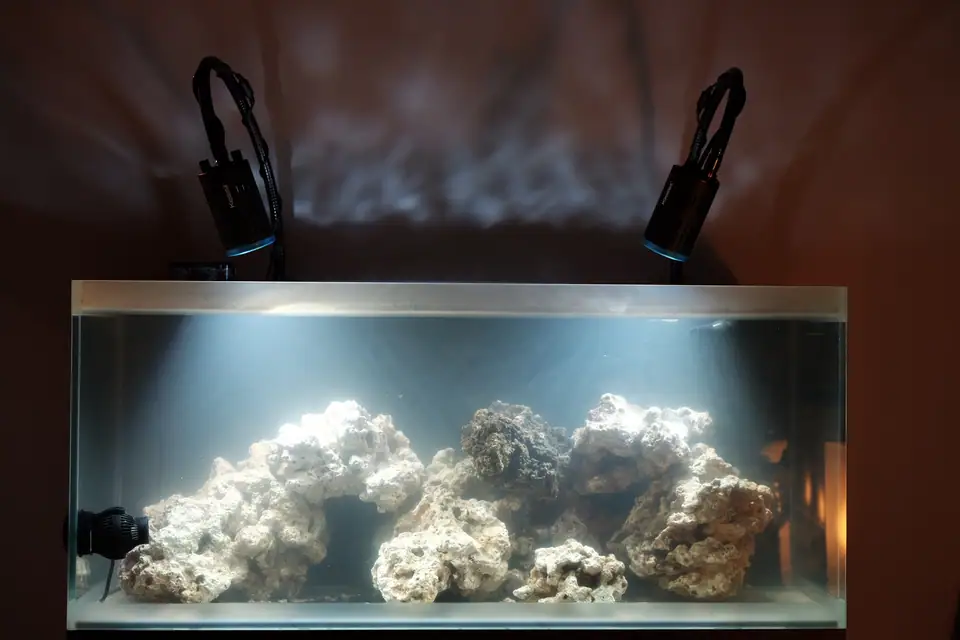
How to Cycle a Fish Tank: Nitrogen Cycle, Test Kits and Conditioners
How the nitrogen cycle works, how long cycling takes, fishless cycling step by step, test kits and what water conditioners do, from UF/IFAS, VCA and makers.
Photo: kerinin / Wikimedia Commons, CC BY-SA 2.0