Chapter 7Filtration and waterHow to
How to Cycle a Fish Tank: Nitrogen Cycle, Test Kits and Conditioners
How the nitrogen cycle works, how long cycling takes, fishless cycling step by step, test kits and what water conditioners do, from UF/IFAS, VCA and makers.
We earn from qualifying purchases through links on this page. How we make money.
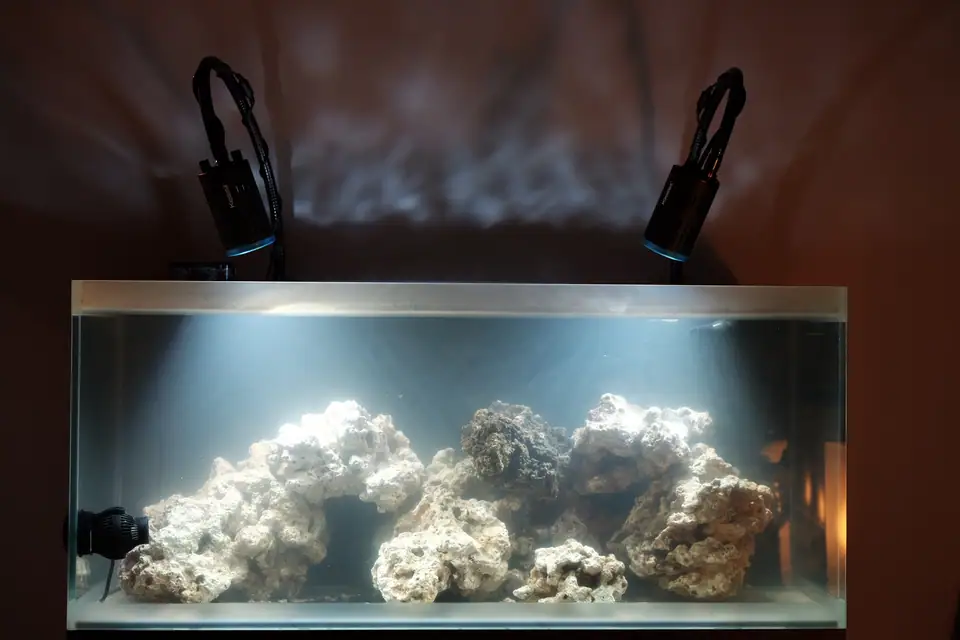
Cycling grows the bacteria that turn toxic ammonia from fish waste into nitrite and then less harmful nitrate. VCA says a new tank needs 4 to 6 weeks to cycle before fish go in, and UF/IFAS puts a new biofilter at 6 to 8 weeks. A liquid test kit shows when ammonia and nitrite reach zero.
The nitrogen cycle in one paragraph
Fish waste, leftover food and decaying matter release ammonia. One group of bacteria turns ammonia into nitrite, and another turns nitrite into nitrate, which Aqueon describes as eventually becoming nitrogen gas. Ammonia and nitrite are the dangerous ones: RSPCA Australia says ammonia is toxic to fish from 0.1 ppm, and UF/IFAS says nitrite can be toxic at 0.10 mg/L. Nitrate builds up more slowly and is removed with water changes.
A new tank has none of these bacteria. They grow on the filter media and gravel over several weeks, which is what “cycling” means.
How long does cycling take?
The sources disagree, so here they are side by side:
| Source | Wait before fish | Notes |
|---|---|---|
| VCA Animal Hospitals | 4 to 6 weeks | Until nitrite and ammonia are acceptable |
| RSPCA Australia | 4 to 6 weeks for the biological filter | Add fish gradually, never many at once |
| UF/IFAS Extension | 6 to 8 weeks | For a new biofilter to build enough bacteria |
| RSPCA (UK) | At least 2 weeks of fishless cycling | Then test ammonia and nitrite every two weeks |
| Dr. Tim’s Aquatics | 30 to 45 days fishless | Faster with its own bacteria product, it says |
| Aqueon setup guide | At least 48 hours | A maker’s minimum, far shorter than the vets’ |
We follow the veterinary and extension advice: plan on four weeks or more, and let the test kit decide.
Liquid test kits, conditioners and bacteria starters
Live listings, shown by eBay
Opens eBay in a new tab. Check condition, seller feedback and returns.
Fishless cycling, step by step
Fishless cycling feeds the bacteria with ammonia instead of fish waste, so no fish are exposed. Dr. Tim’s Aquatics, which makes ammonium chloride for this, describes the steps:
- Set up the tank with filter and heater running and the water treated with conditioner.
- Add ammonia to about 2 to 3 ppm. Never go above 5 ppm.
- Test ammonia and nitrite every 2 or 3 days. Ammonia falls first, then nitrite rises and falls.
- Top up with a small dose of ammonia every few days to keep the bacteria fed.
- The tank is cycled when a full dose disappears overnight to nitrate, with no nitrite showing.
If the pH drops too low, Dr. Tim’s says the cycle can stall; a partial water change brings it back up. Add fish a few at a time afterward, as RSPCA Australia advises, so the bacteria can keep up.
Cycling with fish in the tank
If fish are already in an uncycled tank, RSPCA Australia says to test ammonia and nitrite every 2 to 3 days for the first six weeks and do partial water changes of 10 to 25 percent every 2 to 3 days. It expects ammonia to rise from about the third day and nitrite in the second week.
Test kits: what to measure
A freshwater test kit measures ammonia, nitrite, nitrate and pH. API’s Freshwater Master Test Kit, for example, is a liquid kit with four test tubes and a color card, covering pH, high range pH, ammonia, nitrite and nitrate. Dip-in test strips are the other common format.
Seachem notes one catch: some ammonia test kits read wrong after Prime is added. Nessler-type kits show an off-scale brown, and salicylate kits must be read right away. Read your kit’s instructions before relying on a result. Once the tank is established, RSPCA Australia says testing every one to two weeks is enough.
Water conditioners: what they do and do not do
VCA says most tap water contains chlorine, so it must be treated with a water conditioner; RSPCA Australia adds chloramine. Use conditioner on every fill and top-up.
Some conditioners claim more. Seachem’s label for Prime says it removes chlorine and chloramine and detoxifies ammonia, nitrite and nitrate, binding them for up to 48 hours, at 5 mL per 50 gallons of new water. That can help in an emergency, but it does not grow bacteria. Bacteria starter products, such as those Aqueon and Dr. Tim’s sell, claim to speed cycling; we describe them only by their labels, and the test kit still decides.
After the cycle
UF/IFAS advises testing ammonia weekly in fish production systems and keeping dissolved oxygen above 5 mg/L. For routine care, see how to clean a fish tank, which keeps the bacteria while removing nitrate. The filters chapter shows how to clean media without killing the colony, and the setup checklist lists what else you need. If fish show signs of illness, see a veterinarian who treats fish.
Frequently asked questions
How long does it take to cycle a fish tank?
VCA and RSPCA Australia say 4 to 6 weeks, and UF/IFAS says a new biofilter needs 6 to 8 weeks to build up enough bacteria. Dr. Tim's Aquatics puts a fishless cycle at 30 to 45 days without a bacteria product.
How do I know when my tank is cycled?
When a full dose of ammonia disappears overnight and converts to nitrate with no nitrite showing, says Dr. Tim's Aquatics. On a test kit, that reads as zero ammonia, zero nitrite and some nitrate.
Does a water conditioner cycle a tank?
No. A conditioner makes tap water safe by removing chlorine and chloramine. Seachem says Prime also binds ammonia, nitrite and nitrate for up to 48 hours, but that does not grow the bacteria that cycling needs.
Are test strips or a liquid test kit better?
Both measure the same things; liquid kits such as API's Freshwater Master Test Kit use test tubes and a color card. Seachem notes that some ammonia kits give false readings after Prime is added, so check your kit's instructions.
Can I add fish after 48 hours?
Aqueon's setup guide says fish can go in once the tank has run for at least 48 hours, but the veterinary and welfare sources say 4 to 6 weeks. We follow the longer advice and test before adding fish.
Sources
- Ammonia in Aquatic Systems (FA16)University of Florida IFAS Extension
- Pet Fish: Setting Up an AquariumVCA Animal Hospitals
- Why is water quality important when setting up a fish aquarium?RSPCA Australia
- Choosing an Aquarium: Keeping Pet FishRSPCA
- Fishless CyclingDr. Tim's Aquatics
- PrimeSeachem
- API Freshwater Master Test KitAPI Fishcare
- Setting Up a Freshwater AquariumAqueon
- Why Is the Nitrogen Cycle Important for a Healthy Fish Tank?Aqueon
Part of Filtration and waterStart here: Fish Tank Supplies Checklist: Everything a New Aquarium Needs
Read next
Fish Tank Supplies Checklist: Everything a New Aquarium Needs
What a new freshwater aquarium needs before fish: tank, lid, filter, heater, light, conditioner, test kit, substrate and food, with sizes from vets and makers.
Aquarium Filters: Sponge vs Hang-on-Back vs Canister vs Internal
Sponge, hang-on-back, canister and internal aquarium filters compared: how each works, maker tank ratings, upkeep and which suits bettas, goldfish or big tanks.
How to Clean a Fish Tank: Water Changes, Gravel Vacuums and Algae
How to clean a fish tank: how much water to change and how often per the RSPCA, VCA and makers, gravel vacuuming, algae, and filter care that keeps the cycle.