Chapter 11Fish foodBuying guide
Fish Food Guide: Flakes, Pellets, Frozen and Freeze-Dried, by Fish
Which fish food to buy for bettas, goldfish and tropical fish, how much and how often to feed per vets and the RSPCA, freeze-dried treats and vacation feeders.
We earn from qualifying purchases through links on this page. How we make money.
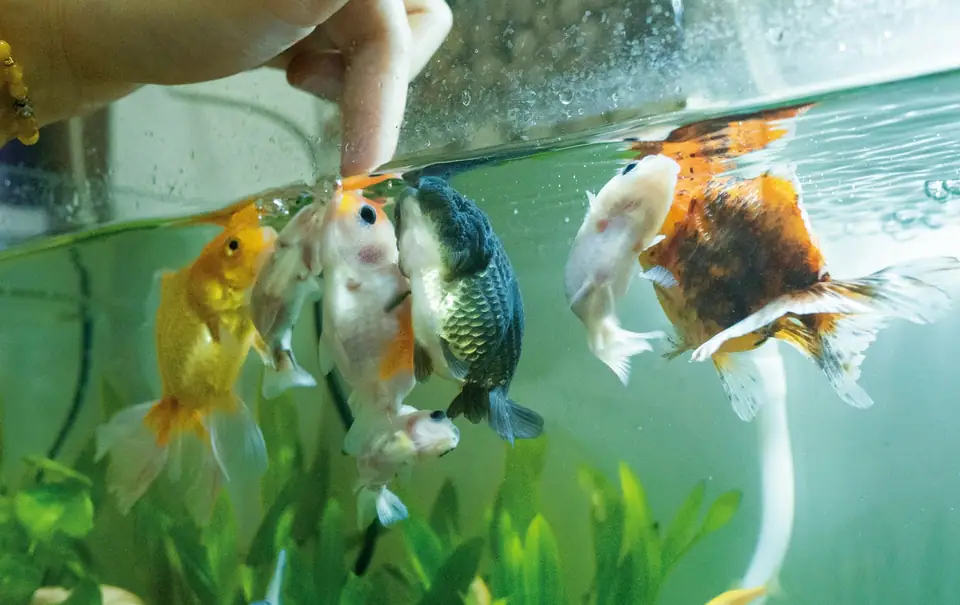
Feed a small amount once a day: RSPCA Australia says only what the fish eat in under two minutes. Bettas take betta pellets or flakes, goldfish a goldfish food, and tropical fish a flake or pellet sized for their mouths. Freeze-dried treats are fine in moderation, say University of Illinois vets. Overfeeding fouls the water.
Food types at a glance
| Food | What it is | Best for | Notes |
|---|---|---|---|
| Flakes | Thin, floating flakes | Small community fish | Crumble for tiny mouths |
| Pellets | Floating or sinking pellets | Bettas, goldfish, larger fish | Hikari’s betta pellets float |
| Wafers | Sinking discs | Bottom feeders | Sink past the others |
| Freeze-dried | Dried bloodworms, brine shrimp and similar | Treats for bettas and others | In moderation, say Illinois vets |
| Frozen | Frozen worms, brine shrimp, daphnia | Treats | Must stay frozen; easiest to buy in store |
RSPCA Australia suggests occasional frozen foods such as blackworms, brine shrimp and daphnia for bettas, alongside specialized pellets. Frozen foods need to stay frozen in transit, so they are easiest to buy at an aquarium shop.
Betta pellets, goldfish food and tropical flakes
Live listings, shown by eBay
Opens eBay in a new tab. Check condition, seller feedback and returns.
How much and how often should you feed?
Every guideline says small amounts; how often varies:
| Source | How often | How much |
|---|---|---|
| RSPCA Australia (bettas, goldfish) | Once a day | What is eaten in under 2 minutes |
| Marina kit manual | Once a day | What is eaten in 2 minutes |
| University of Illinois vets (bettas) | Every day | What is eaten in 3 to 5 minutes, none left over |
| Hikari Betta Bio-Gold label | Up to 3 times a day | 5 to 10 pellets, by the betta’s size |
A single daily feeding fits the veterinary and welfare advice. If you follow a maker’s label with several feedings, keep each one small and remove what is left. The Marina manual also says not to feed new fish for their first 24 hours in the tank.
Food by fish
Bettas. University of Illinois vets call bettas carnivores and recommend a balanced pellet or flake every day, with bloodworms or freeze-dried brine shrimp as occasional treats. Hikari notes a betta may take up to five days to accept a new food. See the betta setup chapter.
Goldfish. The NC State vet quoted by Vetstreet recommends a high-quality food with variety, fed by the package directions, and warns that overfeeding contaminates the water. See the goldfish setup chapter.
Community tropicals. Choose a flake or small pellet sized for the smallest mouths in the tank, and a sinking wafer if you keep bottom feeders.
Why overfeeding is the common mistake
Leftover food breaks down in the tank. Aqueon names uneaten fish food as a source of ammonia, and ammonia is what cycling works to remove; see how to cycle a fish tank. Feed less, and siphon up what sinks during your regular cleaning.
Check the date on a food container before you buy, keep it closed and dry, and follow the storage directions on the label.
Feeding a mixed tank
In a community tank, floating food is taken at the top and sinking food reaches the bottom, and quick fish can eat more than their share. Watch the whole two minutes that RSPCA Australia allows, not only the first few seconds. If a bottom feeder is going without, add a sinking wafer rather than more flakes.
Bettas live alone, as the betta chapter explains, so there is no competition; Hikari still warns against overfeeding its betta pellets.
Treats, and where to buy them
Treats are extras, not the diet. University of Illinois vets say bloodworms and freeze-dried brine shrimp should be given in moderation, and RSPCA Australia describes frozen blackworms, brine shrimp and daphnia as occasional supplements for bettas.
Dry and freeze-dried foods ship well. Frozen foods need an unbroken cold chain from seller to freezer, so buy frozen and live foods at an aquarium shop if your fish’s diet calls for them.
Automatic and vacation feeders
An automatic feeder clips to the rim and drops a set amount of dry food on a timer. It is the usual answer for a trip away. Set it to the same small daily amount you would feed by hand, and run it for a few days while you are still home to check it dispenses the right amount and does not jam. Vacation feeder blocks release food slowly as they dissolve; check the maker’s directions for tank size.
Automatic and vacation fish feeders
Live listings, shown by eBay
Opens eBay in a new tab. Check condition, seller feedback and returns.
A feeder makes a useful present too; see gifts for aquarium keepers. The setup checklist lists the rest of the gear. Cycling and cleaning are in the tank care section.
Frequently asked questions
How often should I feed my fish?
RSPCA Australia says once a day for bettas and goldfish, only what they eat in under two minutes, and the Marina kit manual gives the same rule. Hikari's betta label allows up to three small feedings a day, so keep every feeding small whichever schedule you follow.
What is the best food for a betta?
A betta pellet or flake as the daily staple, say University of Illinois vets, who call bettas carnivores. Treats such as freeze-dried bloodworms or brine shrimp are fine in moderation.
Can goldfish eat tropical fish flakes?
A food labeled for goldfish is the simple choice. The NC State vet quoted by Vetstreet recommends a high-quality food, some variety and feeding by the package directions.
How long can fish go without food on vacation?
Do not plan on fasting them. An automatic feeder set to the normal daily amount, tested for a few days before you leave, keeps meals on schedule while you are away.
What happens if I overfeed my fish?
Uneaten food decays into ammonia: Aqueon names uneaten fish food as one of the sources of ammonia in a tank. The NC State vet warns that overfeeding contaminates the water.
Sources
- How should I care for my Siamese fighting fish?RSPCA Australia
- How should I care for my goldfish?RSPCA Australia
- Bettas Need More Than BowlsUniversity of Illinois College of Veterinary Medicine
- Betta Bio-GoldKyorin (Hikari)
- Your First Fish: Happy, Healthy Goldfish Require Diligent CareVetstreet
- Marina LED Aquarium Kit instructions (5, 10 and 20 gallon)Rolf C. Hagen, hosted by Chewy
- Why Is the Nitrogen Cycle Important for a Healthy Fish Tank?Aqueon
Part of Fish foodStart here: Fish Tank Care: Cycling, Cleaning and Feeding
Read next
Fish Tank Care: Cycling, Cleaning and Feeding
Routine fish tank care: cycling a new tank before fish, partial water changes and gravel cleaning, and how much to feed, from vets, the RSPCA and UF/IFAS.
How to Clean a Fish Tank: Water Changes, Gravel Vacuums and Algae
How to clean a fish tank: how much water to change and how often per the RSPCA, VCA and makers, gravel vacuuming, algae, and filter care that keeps the cycle.
How to Cycle a Fish Tank: Nitrogen Cycle, Test Kits and Conditioners
How the nitrogen cycle works, how long cycling takes, fishless cycling step by step, test kits and what water conditioners do, from UF/IFAS, VCA and makers.